If eating disorder thoughts, body struggles, or overwhelming emotions have been taking up too much space, know this: change is possible.
Healing isn't about perfection-it's about real connection, compassionate support, and learning to trust yourself again.
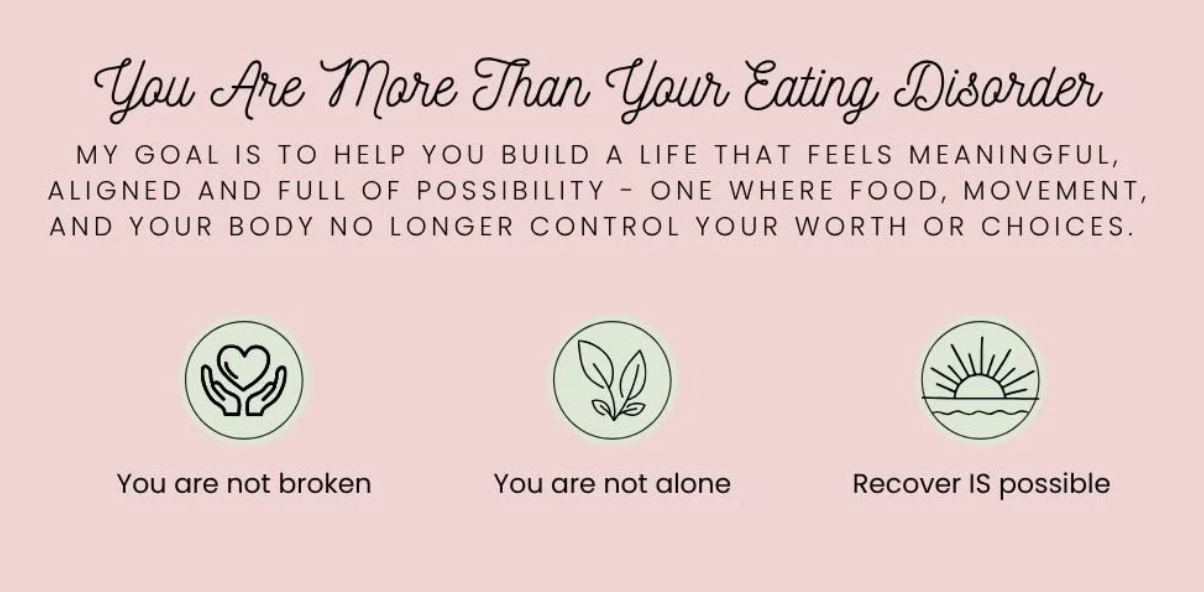
You Are More Than Your Eating Disorder
My goal is to help you build a life that feels meaningful, aligned, and full of possibility-one where food, movement, and your body no longer control your worth or choices.
I'm here to walk beside you on your recovery
Recovery is Possible.
You Deserve Support.


The Power of Collaborative Recovery
Why Coaching?
While clinical treatment provides the foundation for recovery, coaching provides the scaffolding for real life. Coaching bridges the gap between "knowing what to do" and "knowing how to do it" in the messy, everyday moments.
As a CCI-certified coach and peer mentor, I focus on the practical "how" of recovery: navigating social situations, managing body image distress, and rebuilding the intuitive trust that was lost.
The Evidence: What Research Says
Support rooted in lived experience and professional coaching isn't just "nice to have"—it is a scientifically backed component of successful recovery.
Higher Success Rates: Research indicates that individuals who incorporate peer mentorship and coaching into their care are significantly less likely to drop out of treatment compared to those with standard social support alone.
Faster Symptom Reduction: Studies published in the International Journal of Eating Disorders show that coaching helps significantly reduce body dissatisfaction and anxiety more effectively than traditional support alone.
The Power of Connection: The "therapeutic alliance" formed in coaching is one of the strongest predictors of long-term recovery. Having an "anchor"—someone who has been there—provides the accountability and hope necessary to maintain change.
Bridge to Quality of Life: Beyond clinical stability, coaching is proven to improve overall quality of life, helping individuals reconnect with their families, careers, and passions.
Commitment to Growth & Inclusion
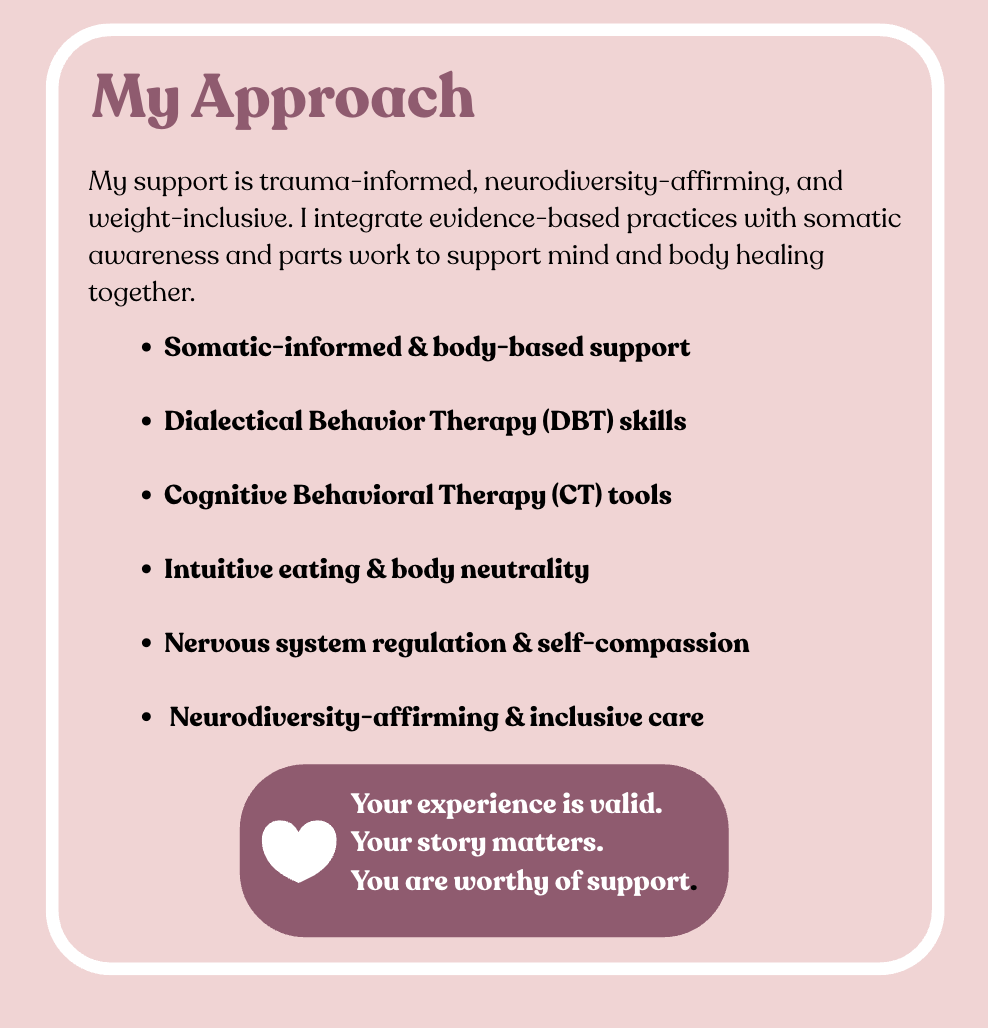
I am deeply committed to evolving alongside the field of recovery. I believe that being a truly helpful coach means staying connected to the most current, evidence-based approaches while remaining a lifelong student.
Beyond my initial certifications, I participate in ongoing weekly education focused on eating disorders, trauma-informed care, and somatic approaches. My goal is to ensure that the support I offer is not only thoughtful and current, but also inclusive of the many diverse ways that healing can look.
My Specialized Training Includes:
Clinical Foundations: Eating Disorder Recovery & Trauma-Informed Care
Identity-Affirming Support: LGBTQ+, Gender-Affirming, & BIPOC-Centered Care
Neurodiversity: ASD & Neurodivergent-Affirming Practice
Holistic Integration: Somatic & Body-Centered Approaches
Inclusive Excellence: Cultural Competence & Diversity in Care
Academic Foundation
Chapman University | B.A. in Integrated Educational Studies
Graduated Cum Laude
Minor in Disability Studies
Professional Certification
Carolyn Costin Institute (CCI)
Certified Eating Disorder Recovery Coach
Clinical Experience
Recovery Coach | Equip Health
Providing integrated, world-class recovery support to hundreds of individuals and families.
Collaborating daily within a multidisciplinary clinical team to bridge the gap between treatment and lived experience.
Work With Me
You don’t have to do this alone.
If your relationship with food, your body, or yourself has started to feel exhausting or consuming—there is another way. One that isn’t built on control or perfection, but on understanding, support, and real change.
-
Navigating recovery and wanting support that feels human and lived-in, not just clinical.
Feeling stuck in patterns with food or behaviors that you can’t seem to break.
Struggling with body image or a constant, nagging sense of “not enough.”
Transitioning out of a higher level of care and wanting a steady hand during the shift.
Craving depth—looking for something beyond surface-level coping that actually lasts.
-
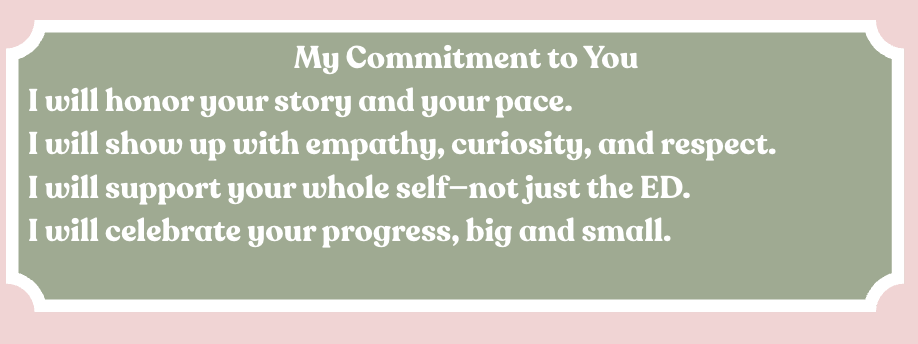
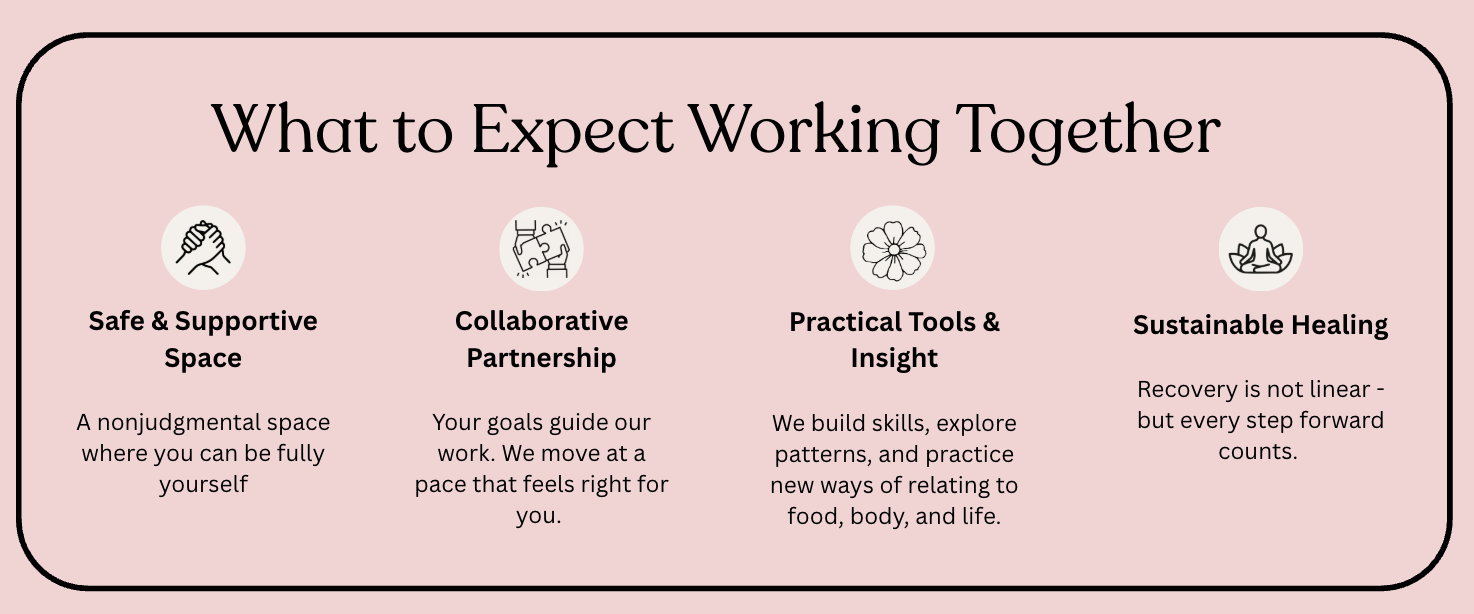
Working together is collaborative, flexible, and centered entirely around you. There is no “perfect way” to do recovery here; we move at a pace that feels safe, while still gently moving forward.
Our sessions might involve:
Unpacking difficult moments or behaviors without judgment.
Decoding what your eating disorder is trying to communicate to you.
Building tools that are actually usable and practical in your real life.
Holding space for hard emotions—without trying to rush past them.
This is a space where you don't have to "perform" recovery.
-
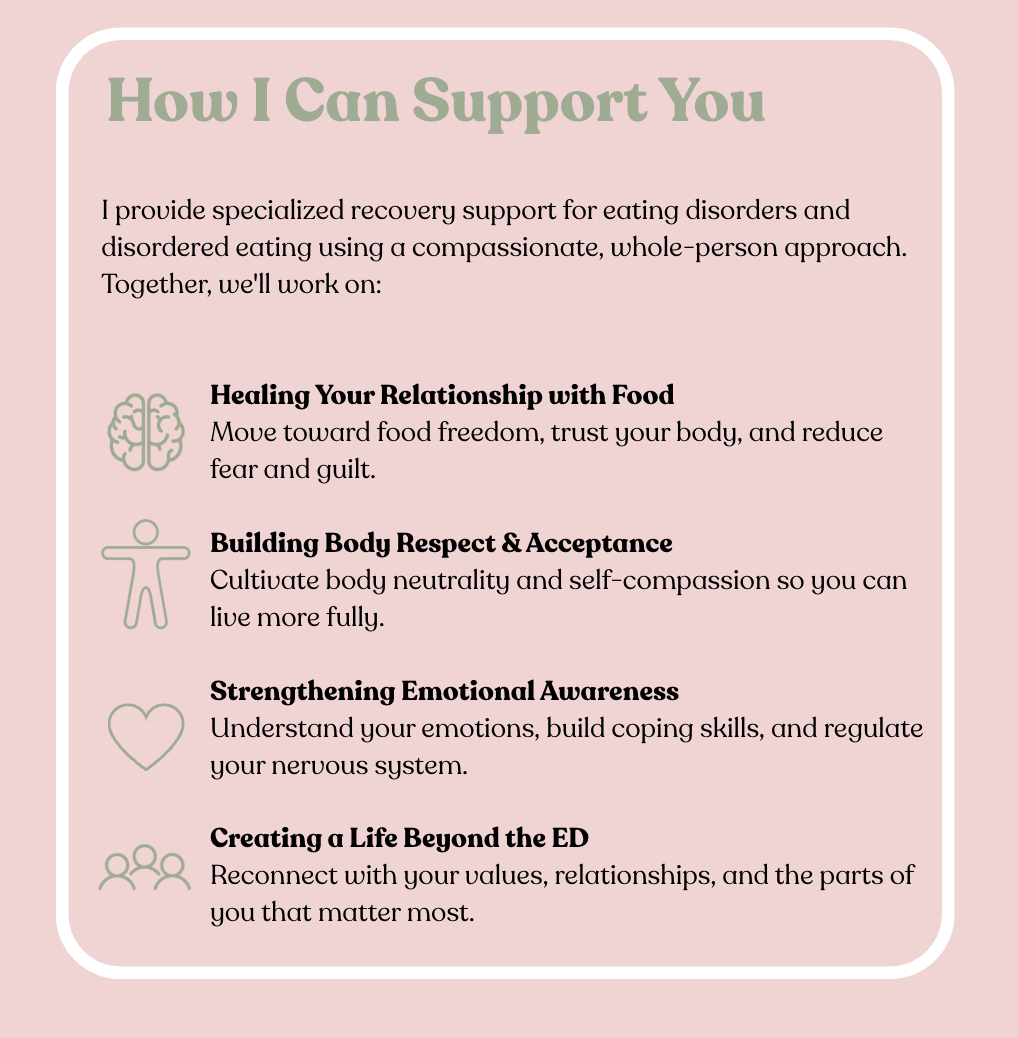
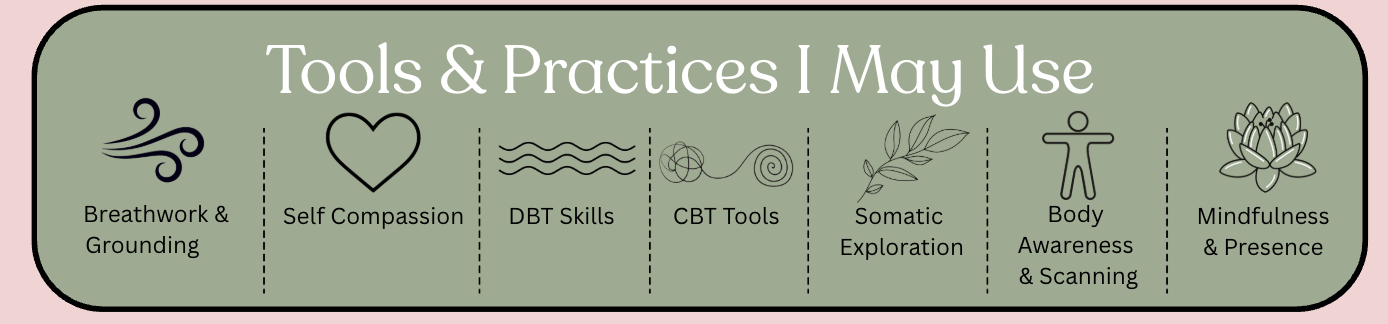
I don't believe recovery is about becoming someone new—it’s about coming back to who you already are. My work blends lived experience, evidence-based tools, and somatic awareness with a mix of deep compassion and gentle accountability.
We will focus on:
Understanding what your eating disorder has been trying to do for you.
Learning how to meet those needs in new, sustainable ways.
Building a relationship with yourself that feels safe, trusting, and your own.
-
I work with individuals navigating a wide spectrum of experiences, including:
Anorexia, Bulimia, & Binge Eating Disorder
ARFID & OSFED
Orthorexia or obsessions with "clean" eating
Chronic disordered eating patterns & body image challenges
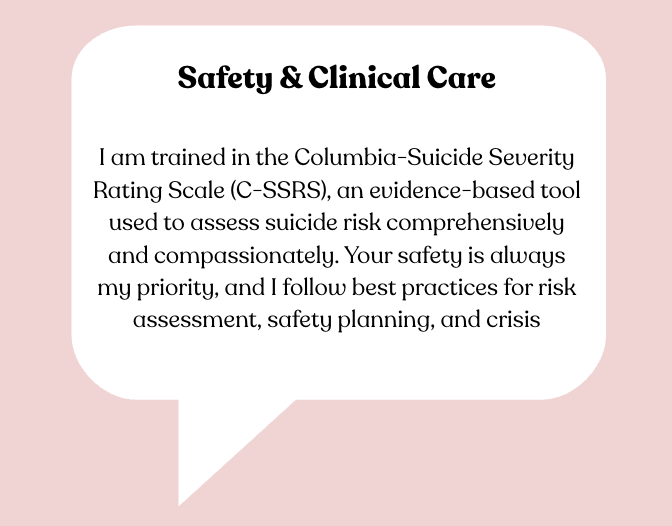
A Note on Care: While I bring professional training and lived experience, coaching is not a replacement for medical or clinical care. My role is to walk alongside you as a supplement to your journey—not to replace a clinical treatment team. If you need a higher level of support, I will always help guide you toward the resources that best meet your needs.
If this feels like the kind of support you’ve been looking for
I’d love to connect.